DMiR flyer
The BSM Director’s Mathematician in Residence Program (DMiR) is conducted under the direction of the BSM North American office. The program is open to individual faculty members, as well as to research teams of two or more scholars applying jointly. Spend three weeks during the spring, summer, or fall as the BSM Director’s Mathematician in Residence in beautiful Budapest, and enjoy a unique opportunity for professional development, networking, and collaboration with renowned Hungarian mathematicians. Gain valuable international experience, as well as a firsthand look at the BSM program and all it offers to participating undergraduate students.
The program funds travel to Hungary and housing in Budapest. Office space, internet access, and a math library are also available. In addition to providing in-country support, local BSM staff will coordinate a social program including an orientation, city tour, and opportunities to meet with students. Faculty members accepted to the program (DMiR scholars) will be expected to be available to BSM students two to three hours per week and to give a short lecture series, targeted to BSM students, on their research area.
Faculty Application Deadlines:
SPRING: November 1st
SUMMER: December 1st
FALL: April 1st
Interested applicants should request a letter of invitation to apply by emailing BSM North American Director Kristina Garrett at [email protected] or BSM Associate Director Kathryn Ziegler-Graham at [email protected].
Past and Present DMiR Scholars
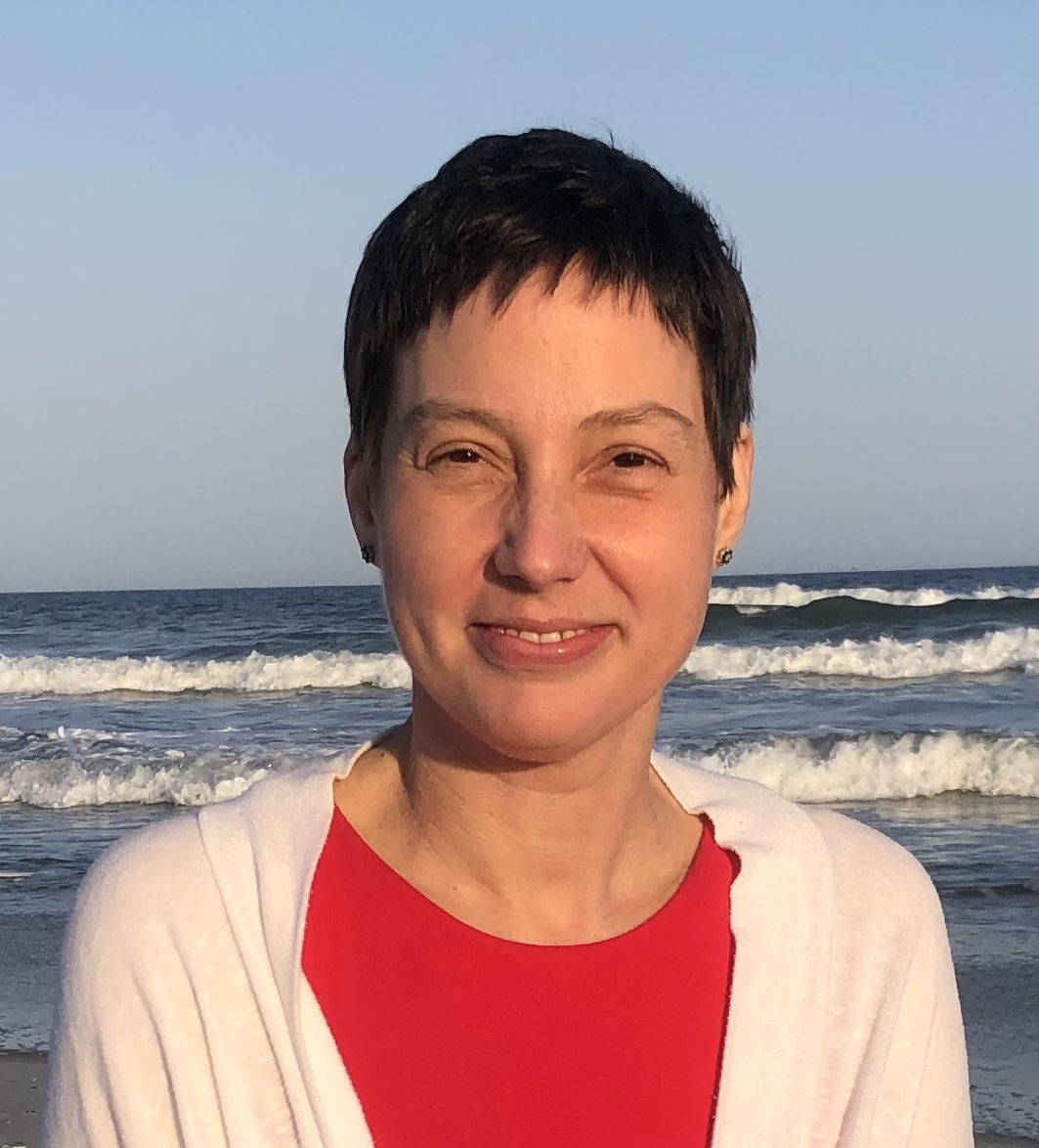
Karola Mészáros – Summer 2026
Karola Mészáros is an algebraic combinatorialist. She is interested in the interplay between algebra, geometry, knot theory and combinatorics. The overarching theme of her current research is to develop a new perspective on classical polynomials by recasting them in terms of polytopes. She is a Professor of Mathematics at Cornell University and a Fellow of the American Mathematical Society. She received her B.A. and Ph.D. at MIT (2005 and 2010, respectively). She was an NSF Fellow at the University of Michigan (2011-2012) and a von Neumann Fellow at the IAS (2018-2019).
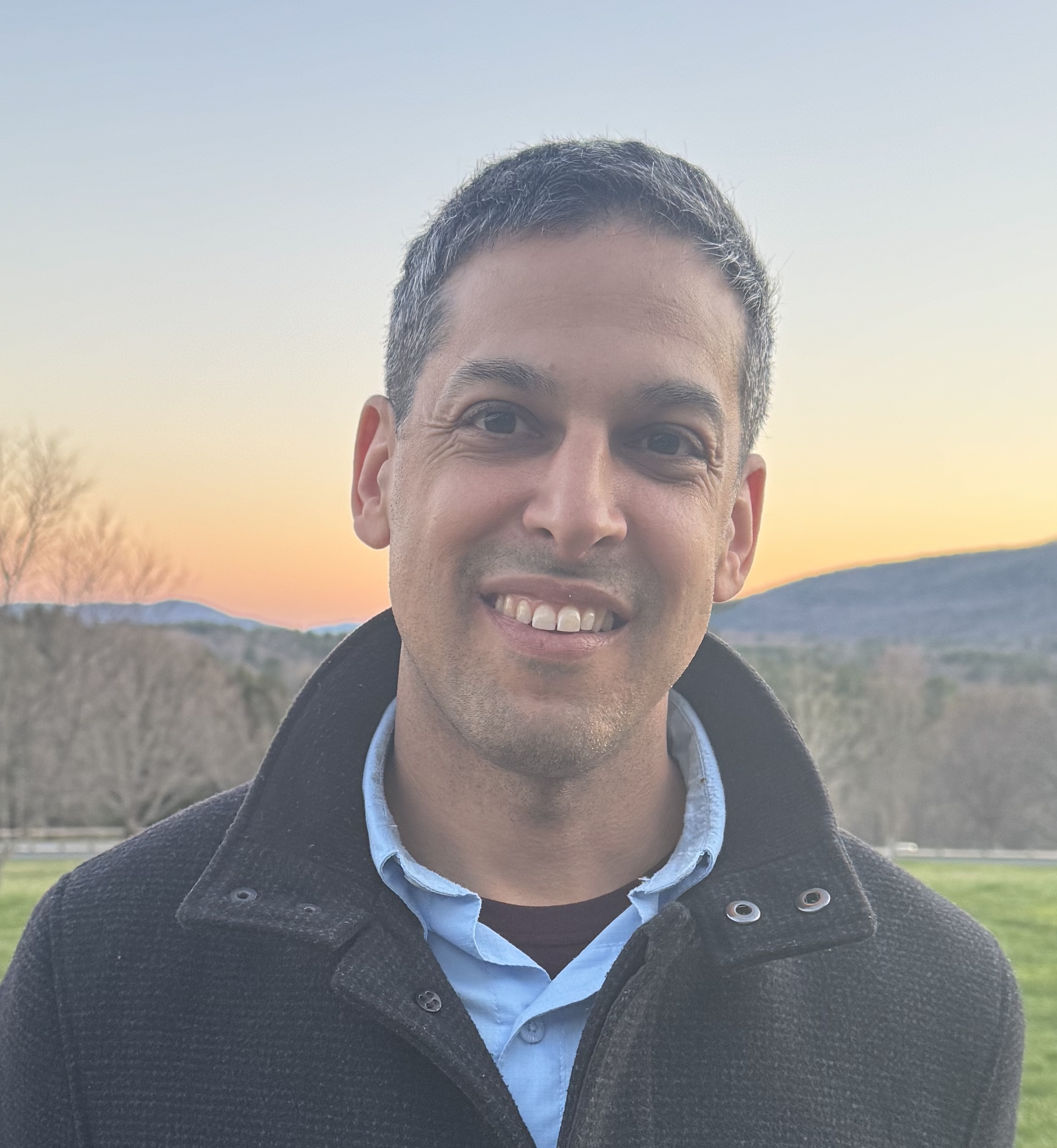
Lionel Levine – Summer 2026
Lionel Levine is a mathematician working on AI safety. His research is aimed at increasing the probability that future AI systems benefit humanity and the planet. He is a Professor of Mathematics at Cornell University, a Fellow of the American Mathematical Society, and a past recipient of a Sloan Fellowship, NSF CAREER Award, and IAS Von Neumann Fellowship.
* * *
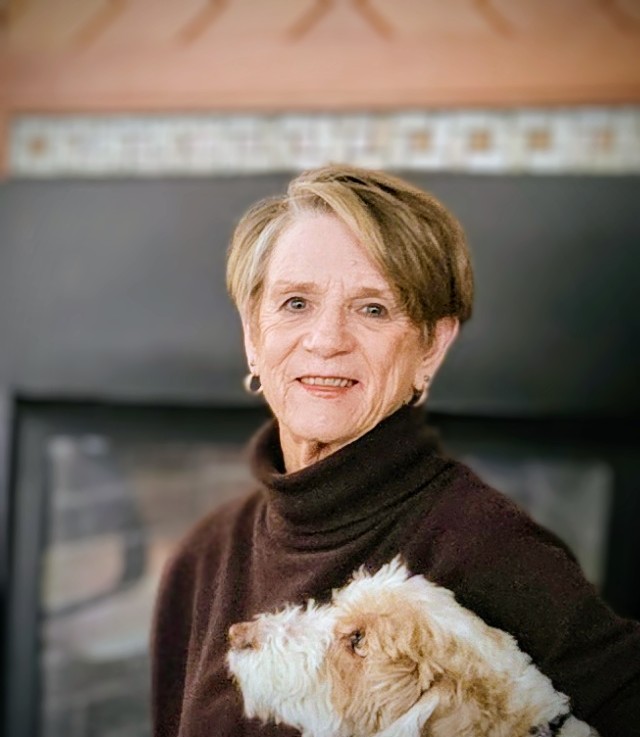
Linda Lesniak – Spring 2026
Dr. Linda Lesniak is a faculty member at Western Michigan University. She has also held tenured positions at Louisiana State University and Drew University, as well as serving for many years as a co-PI of the DIMACS Connect Institute at Rutgers University. More recently Linda was a co-founder of WIGA (Women in Graph Theory and Applications) and WinCom (Women in Combinatorics). She is the author/ co-author of over 100 research articles, was an original author of the text Graphs and Digraphs (6 editions) and serves on the editorial boards of several journals including the Journal of Graph Theory. She had a Fulbright in Budapest at the Hungarian Academy of Sciences and has visited Budapest at least 8 or 9 times, the last visit in the summer of 2024. In the last 5 years, Linda has been working with a group of Graph Theorists from Mexico, including Dr. Gabriela Araujo-Pardo, who will be visiting BSM with her.
In addition to doing graph theory research, Linda loves to travel, recently finding family near Kraków, Poland.
Gabriela Araujo-Pardo – Spring 2026
Gabriela Araujo-Pardo is a faculty member at the Institute of Mathematics (Juriquilla Unit) of the National Autonomous University of Mexico (UNAM). She earned her Ph.D. from the Faculty of Sciences at UNAM in 2000 and held a postdoctoral position at the Polytechnic University of Catalonia, Spain, in 2002. In 2020, she spent a sabbatical year at the Université Libre de Bruxelles. She currently holds a Level III appointment in Mexico’s National System of Researchers (SECHITI).
Her research interests lie in discrete mathematics, with a particular focus on finite geometries and their connections to graph theory. She has authored approximately 75 research articles, supervised undergraduate, master’s, and doctoral theses, and participated in more than 85 national and international conferences. In 2003, she received the Sofía Kovalevskaia Support award from the Mexican Mathematical Society and the Sofía Kovalevskaia Foundation. She has been a member of the Mexican Academy of Sciences since November 2013 and received the Sor Juana Inés de la Cruz recognition from UNAM in the same year. In 2024, she was elected a TWAS Fellow.
She served as President of the Mexican Mathematical Society from February 2022 to February 2026.
* * *
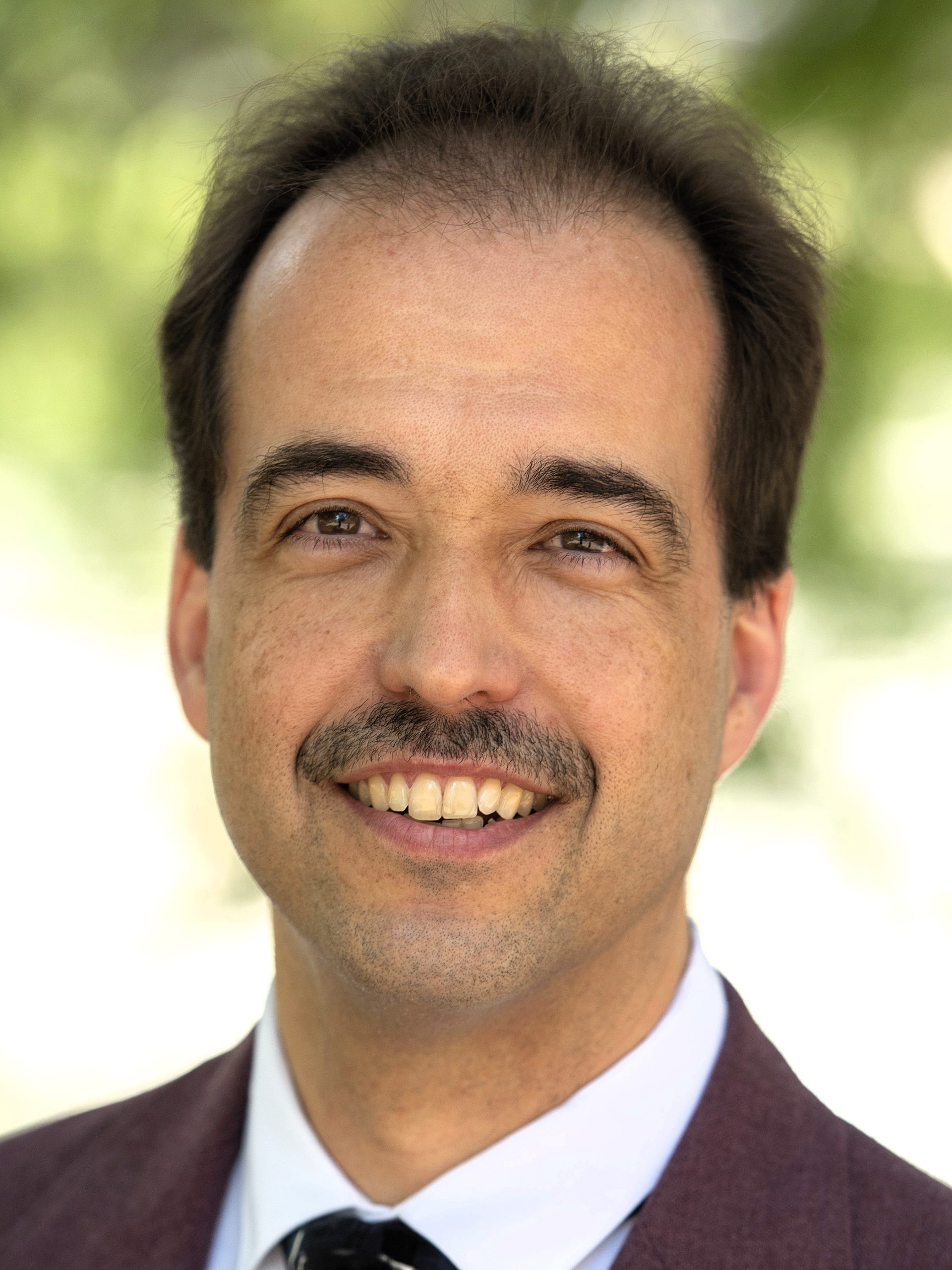
Thomas M. Keller – Summer 2025
Thomas Michael Keller grew up in Wiesbaden, Germany, before attending the Johannes Gutenberg University in Mainz, Germany, where he earned his Master’s and Ph.D degrees. After post-docs at Friedrich-Schiller University in Jena (Germany), Ohio University in Athens, OH, University of Wisconsin-Madison and Leicester University (United Kingdom), in 1998 he started as an assistant professor at Texas State University, with promotions to associate and full professor in 2001 and 2006, respectively. His research interests are in finite group and representation theory with a focus on orbits in linear group actions and conjugacy classes.
Since 2019, together with his colleague Yong Yang, he has been running the NSF- and NSA-sponsored Texas State REU program in Algebra, Combinatorics, and Statistics. He has published more than 50 research articles, including over a dozen articles with undergraduate and graduate students. Additionally, during many summers he has supervised mathematical research projects for high school students. He also is on the editorial board of the Journal of Algebra and its Applications.
* * *
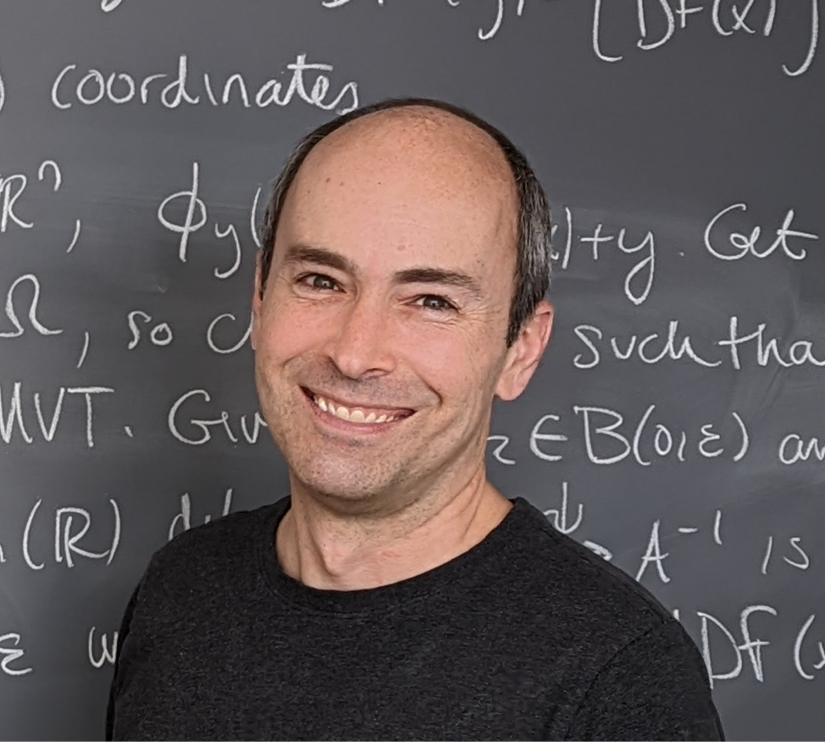
John Wesley Cain – Summer 2024
John Wesley Cain is the assistant director of undergraduate studies and a senior lecturer on mathematics at Harvard University. After graduating from North Carolina State University in 1998, he earned a Ph.D. in mathematics from Duke University in 2005. As an undergraduate, he enjoyed two semesters as a student in the Budapest Semesters in Mathematics program. His research is in applied mathematics, mostly involving problems at the interface of mathematics, biology, and medicine.
* * *
Carl R. Yerger – Spring 2024
Carl Yerger is a professor and former chair of the Department of Mathematics and Computer Science at Davidson College. After graduating from Harvey Mudd College in 2005, Carl took Part III of the Mathematical Tripos as a Churchill Scholar at Cambridge University in 2006 and then earned a Ph.D. in Algorithms, Combinatorics, and Optimization from Georgia Tech in 2010. His mathematical interests are in structural graph theory, combinatorics, and Ramsey theory. In addition, he has served as Co-Editor-in-Chief of the AMC 10/12 exam since 2017 and helps organize the Charlotte Mathematics Club.
* * *
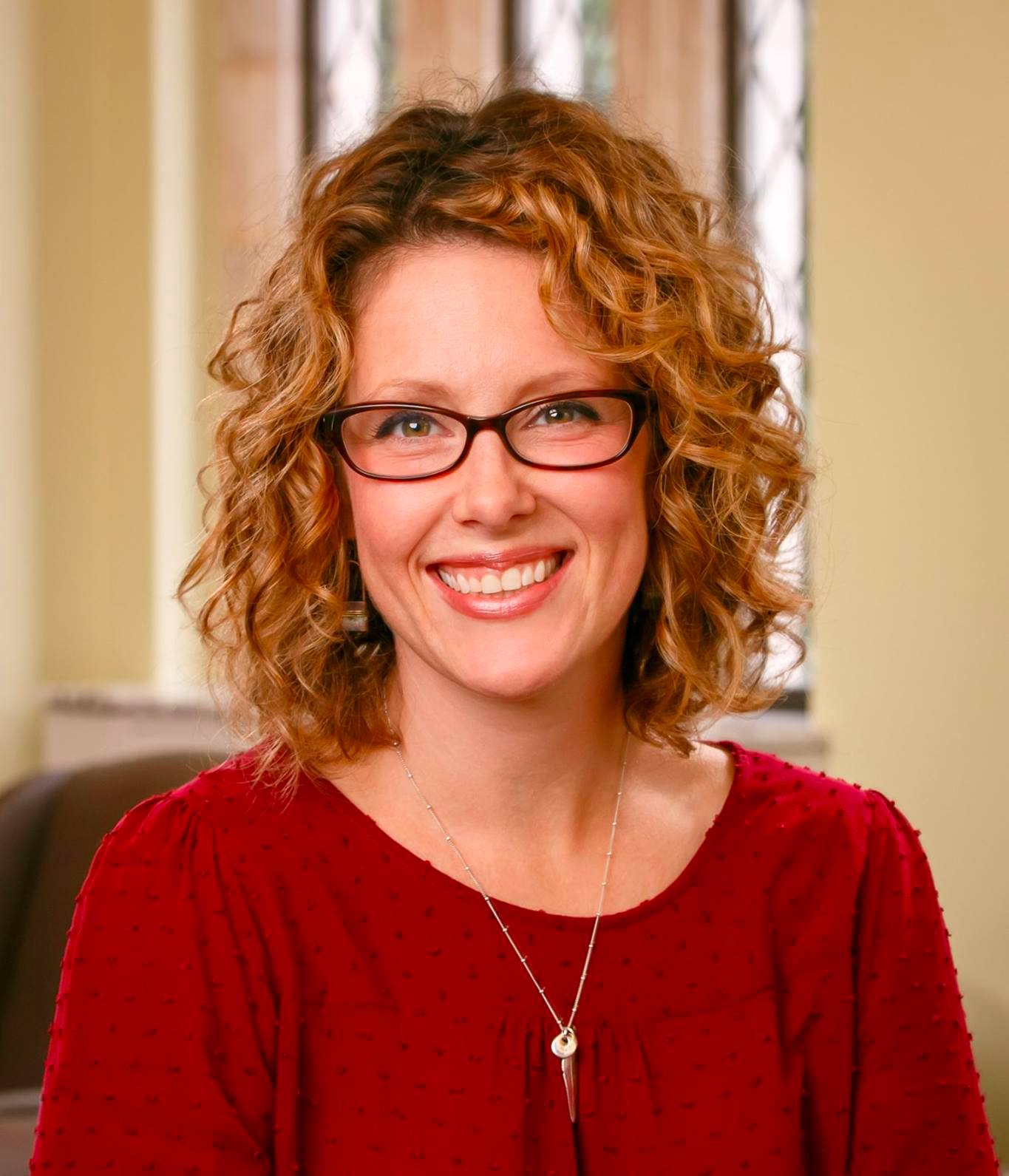
Heather M. Russell – Summer 2023
Professor Heather M. Russell is an associate professor of mathematics at the University of Richmond. She received B.A. degrees in mathematics and computer science from Washington College in 2003 and a Ph.D. in mathematics from The University of Iowa in 2009. Before coming to Richmond, she held post-doctoral positions at Louisiana State University and University of Southern California and also taught briefly at her undergraduate alma mater.
Professor Russell’s research lies primarily at the interface of algebraic combinatorics and low-dimensional topology, and diagrammatic structures play a prominent role in her work. Professor Russell is passionate about involving students in her research and building a more inclusive math community.
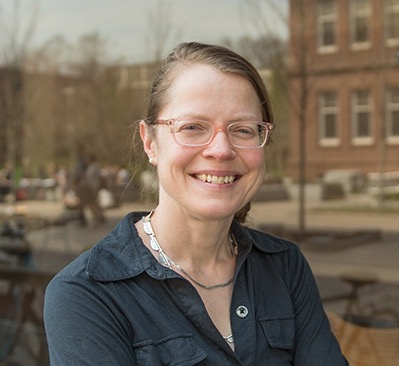
Julianna Tymoczko – Summer 2023
Julianna Tymoczko is a professor in the Department of Mathematical Sciences at Smith College. She was an undergraduate at Harvard, a graduate student at Princeton, and an NSF and Hildebrandt postdoctoral fellow at the University of Michigan. Before coming to Smith, she was an assistant professor at the University of Iowa. She received fellowships from the NDSEG, the Clay Foundation, and the Sloan Foundation, as well as from the NSF, and is Fellow of the American Mathematical Society.
Professor Tymoczko’s research is at the interface of combinatorics, algebra, and geometry, in different proportions depending on the project. She believes mathematics is a big tent that does better with more people from different backgrounds and perspectives. She has supervised over 100 undergraduates in mathematical research projects, in addition to graduate and postdoctoral students. Professor Tymoczko is also a co-director of the Post-baccalaureate Program at Smith College, a one-year program for college graduates who want to pursue graduate degrees in the mathematical sciences but need additional training.
* * *
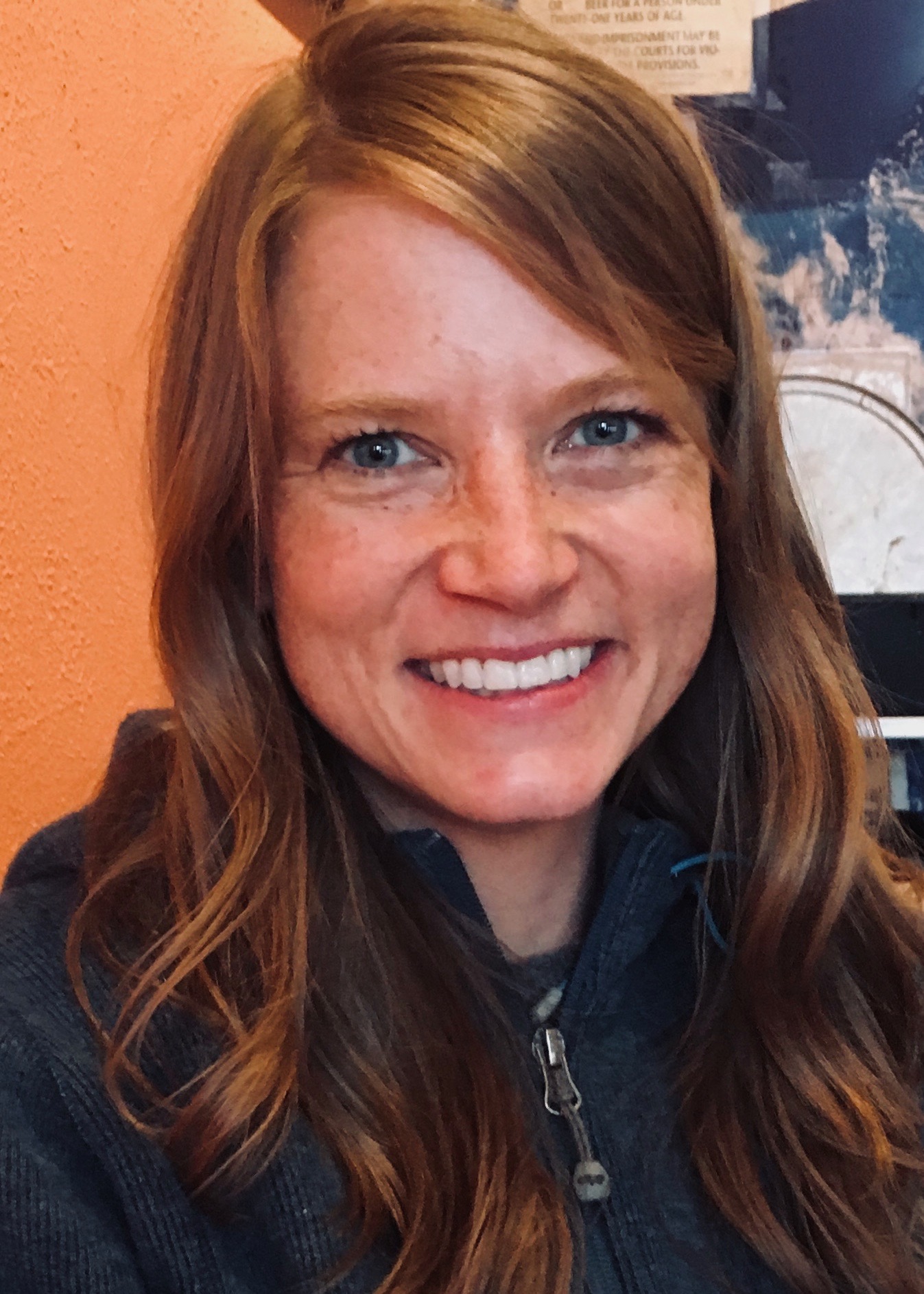
Beth Malmskog – Fall 2022
Professor Beth Malmskog from Colorado College earned her Bachelor’s degree from the University of Wyoming and her PhD at Colorado State University.
She is currently working to develop and publish a set of 10-12 learning modules on novel applications of discrete mathematics, each with an accompanying article/interview highlighting the stories of contributors and/or larger context of the application. Her research interests include curves over finite fields, S-unit equations and applications, curves over Q with specified good reduction, automorphism groups of curves, maximal curves, coding theory, cryptography, graph theory, Latin squares, and cross-disciplinary applications of discrete mathematics, including mathematical aspects of redistricting.
* * *
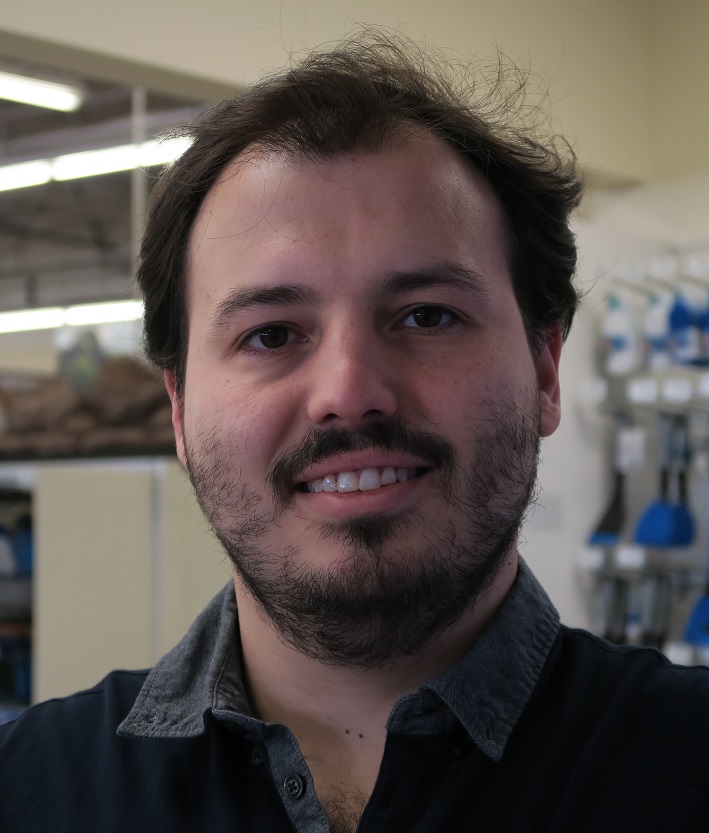
Enrique Trevino – Summer 2022

Paul Pollock – Summer 2022
* * *
Arthur Benjamin – Summer 2019
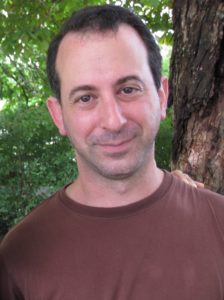
Aaron Abrams – Summer 2019
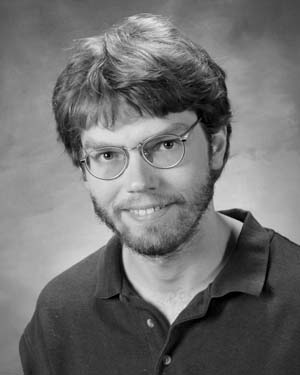
Jamie Pommersheim – Summer 2019
Professor Arthur Benjamin earned his B.S. in Applied Mathematics from Carnegie Mellon and his PhD in Mathematical Sciences from Johns Hopkins. Since 1989, he has taught at Harvey Mudd College, where he is Professor of Mathematics and past Chair. In 2000, he received the Haimo Award for Distinguished Teaching by the Mathematical Association of America, and served as the MAA’s Polya Lecturer from 2006 to 2008. His research interests include combinatorics and number theory, with a special fondness for Fibonacci numbers.
Professor Aaron Abrams is an Associate Professor of Mathematics at Washington and Lee University. He conducts mathematical research in many areas, with interests overlapping the traditional boundaries of geometry, topology, group theory, probability, and combinatorics. In 1992 he became the first undergraduate student from UC Davis to attend the Budapest Semesters program. He is excited to be returning to Budapest with Jamie Pommersheim, his long-time collaborator, where the two will study triangulations of a square.
Professor Jamie Pommersheim is the Katharine Piggott Professor of Mathematics at Reed College. Like Abrams, he also has fond memories of studying at the Budapest Semesters program in Spring 1986, during the second year of the program’s existence. His research interests include quantum computation and toric varieties, a subject that links algebraic geometry to convex polytopes.
* * *
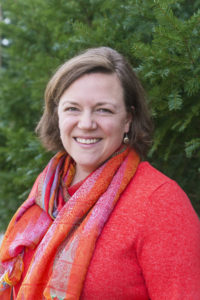
Elizabeth Milicevic – Summer 2018

Djordje Milicevic – Summer 2018
Professor Elizabeth Milićević, Haverford College explores interactions between modern methods in algebraic geometry, algebraic combinatorics, and representation theory. In particular, she is interested in answering geometric and topological questions about algebraic varieties such as (affine) Grassmannians and flag varieties, and affine Deligne-Lusztig varieties using the methods of algebraic combinatorics, combinatorial representation theory, and even geometric group theory. Related interests include the study of the partially ordered set of Newton polygons associated to elements in the affine Weyl group, the Peterson isomorphism relating quantum and affine Schubert calculus, and various affine Hecke algebras.
Professor Djordje Milićević, Bryn Mawr College. I am an analyst and a number theorist. My research is concerned with analysis on arithmetic manifolds, automorphic forms, L-functions, and analytic number theory. I study arithmetic objects using tools from spectral analysis, representation theory, analytic number theory, and p-adic analysis. A Ph.D. graduate of Princeton University, I have taught and done research at the University of Michigan, Amherst College, the Max Planck Institute for Mathematics in Bonn, Germany, and the University of Melbourne in Australia
* * *
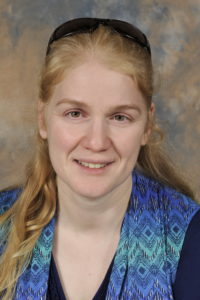
Gizem Karaali – Summer 2017
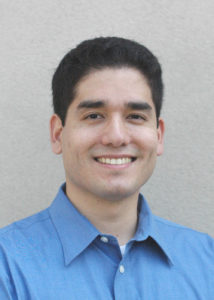
Stephan Garcia – Summer 2017
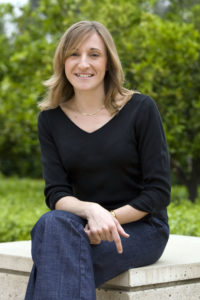
Susan Martonosi – Summer 2017
Professor Gizem Karaali is originally from Istanbul, Turkey, where she graduated with undergraduate degrees in electrical engineering and mathematics (Boğaziçi University, 1997). She earned her mathematics PhD at the University of California, Berkeley, in 2004. After a two-year postdoctoral position at the University of California, Santa Barbara, she moved on to Pomona College in 2006, where she is now an associate professor of mathematics. This job, together with her work on the Journal of Humanistic Mathematics, the Mathematical Intelligencer, and Numeracy, keeps her quite busy and happy. When she is not Professor Karaali, she enjoys discovering new places and new books, walking alone and with friends, and cooking with her two young children. She is simultaneously thrilled by and terrified of the possibility that some day her poetry in Turkish will find a reader other than herself.
Professor Stephan Ramon Garcia grew up in San Jose, California before attending U.C. Berkeley for his B.A. and Ph.D. He worked at U.C. Santa Barbara for three years before moving to Pomona College in 2006. He is the author of several books and over seventy-five research articles in operator theory, complex analysis, matrix analysis, number theory, discrete geometry, and other fields. He has coauthored over two dozen articles with students, including two papers in the Notices of the AMS and one that was selected to appear in “The Best Writing on Mathematics: 2015”. He is on the editorial boards of Proceedings of the AMS, Involve, American Mathematical Monthly, and Annals of Functional Analysis. Garcia received three NSF research grants as principal investigator and five teaching awards from three different institutions. He was twice nominated by Pomona College for the CASE US Professors of the Year Award.
Professor Susan Martonosi graduated with a B.S. in Operations Research and Industrial Engineering from Cornell University in 1999. She then spent two years as a Peace Corps Volunteer teaching high school mathematics (in French!) in the Republic of Guinea, West Africa. When she returned, she began pursuing her Ph.D. in Operations Research at MIT, which she received in 2005. The focus of her research was operations research models to improve aviation security. She joined the mathematics faculty of Harvey Mudd College in 2005. Her research has included disruption of terrorist networks using tools from graph theory and network optimization, homeland security using tools from game theory, interventions against malaria using tools from differential equations and integer optimization, pediatric vaccine pricing using tools from game theory, and recently, sports analytics. In addition to her teaching and research, she has held administrative roles in the HMC Clinic program, in which student teams complete capstone projects for industrial sponsors.
* * *
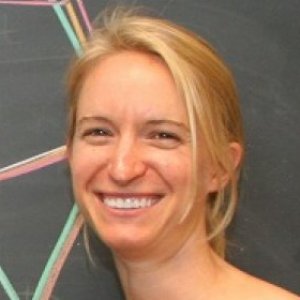
Alissa Crans – Summer 2016
Andrew Beveridge – Summer 2016
Professor Alissa Crans’ interests are in algebra, particularly in higher dimensional Lie algebras and their relationships with topology as well as relationships between mathematics and music, and broadening participation in mathematics. She joined the Loyola Marymount University faculty in 2004. Dr. Crans received her Ph.D. and M.S. from UC Riverside in 2004 and 2000, respectively, and her B.S. degree from the University of Redlands in 1999. She joined the LMU faculty in 2004.
Professor Andrew Beveridge, Macalester College, studies random processes on graphs. He is particularly interested in random walks on graphs as well as network structures generated by random processes. He is also interested in games that involve both randomness and strategy. He has led summer undergraduate research groups at Carnegie Mellon University and the Institute for Mathematics and its Applications at the University of Minnesota. He has also taught at MathPath, an advanced summer camp for junior high school students who love math.